
Airspace development can provide opportunities in prime locations where land is scarce – often with lower competition than traditional sites. But these schemes come with unique hurdles, so success depends on getting the detail right.
Few projects reward careful preparation more than building up. Whether you’re adding homes above a residential block, retail parade or commercial building, airspace schemes can deliver attractive returns while making better use of existing urban infrastructure. This guide explains what airspace development is, where opportunities sit, and how to navigate planning, risk, funding, and exit strategy.
What is airspace development?
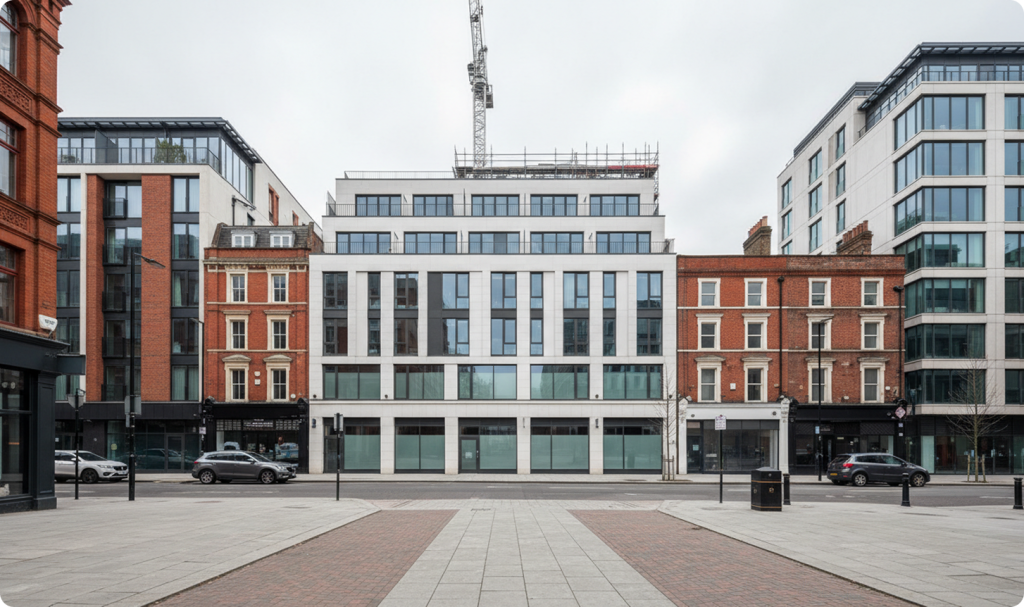
With a lack of housing supply across the UK, there’s an alternative to horizontal growth – building up. Airspace development, also known as rooftop development, involves constructing additional storeys or new homes on top of existing buildings.
Opportunities exist across residential blocks, commercial rooftops such as offices and retail parades, and mixed-use buildings. The appeal is clear – you may be able to create value in well-connected locations while using existing footprints and infrastructure. However, airspace development is not a straightforward extension project. It often involves complex ownership, structural engineering, compliance planning and stakeholder management, especially in occupied buildings.
What should your airspace development checklist include?

Before you commit to an airspace development, make sure you:
- Confirm the planning route – identify whether permitted development rights may apply, or whether full planning will be required, and map key constraints early
- Secure legal control – establish ownership of the roof space, confirm title boundaries, and agree terms with freeholders, leaseholders and occupiers
- Validate structural feasibility – assess loading capacity, strengthening requirements and build methodology with an experienced structural engineer
- Plan access and logistics – confirm how materials, workers and waste will reach the roof safely, with minimal disruption to residents and tenants
- Confirm procurement and funding fit – if using MMC or off-site manufacture, check whether forward funding is required and available
- Build compliance into the design – integrate fire strategy, acoustics, thermal performance and means of escape early to avoid redesign
- Align funding and exit – model the programme realistically and match finance and exit strategy to the delivery profile
A strong checklist approach is especially important in airspace development because several risks sit outside normal construction complexity. Legal control, resident disruption, access logistics and compliance at height can all become programme-critical and can be difficult to reverse once the scheme is committed.
What types of airspace projects offer the best opportunities?

Airspace development can take several forms, each with different risk and reward profiles. The best opportunities tend to be those where the fundamentals stack up early – clear legal control, deliverable access and logistics, structural feasibility, and a realistic planning route. Understanding which project type best fits your experience and risk appetite helps you focus on schemes that are deliverable and financeable.
Airspace projects generally fall into three opportunity types:
- Residential block extensions – adding storeys above existing apartment blocks
- Commercial and mixed-use rooftops – above offices, retail parades and other commercial assets
- Upgrade-led schemes – combining new rooftop units with wider refurbishment or fire safety upgrades
Airspace schemes can be attractive because they are often located in high-demand areas where land supply is constrained. The opportunity depends on specialist delivery rather than bidding strength alone, so the most successful developers focus on schemes where constraints are manageable and the end product clearly fits local demand.
What are the planning routes for airspace development?

Planning strategy is one of the biggest success factors in airspace development. Some rooftop schemes may be possible under permitted development rights introduced for upward extensions, including Class AA, AB and AC. These were designed to make it easier to add storeys to certain buildings, but they come with important limitations and are not automatic.
For a practical overview of eligibility and limitations, it’s worth reading the Planning Portal guidance on extending upwards.
Where permitted development may apply, schemes typically still require prior approval and must satisfy criteria relating to design, amenity, transport impacts, and other considerations. Many rooftop developments fall outside permitted development routes due to building type, location, constraints, or scope, meaning full planning permission is required.
Even where permitted development is achievable, it should be treated as a planning process rather than a shortcut. Local authority expectations, neighbour impacts, and deliverability constraints still influence whether the scheme is approved and how quickly you can progress from design to construction.
Practical steps to take early:
- Confirm eligibility for Class AA, AB and AC, then test limitations against your building type
- Assess potential prior approval risks, including impact on amenity and local character
- Use pre-application engagement where the scheme is sensitive or high-impact
- Ensure early design work reflects neighbour impacts, access constraints and compliance needs
What are the legal, technical and compliance factors for airspace?

Airspace schemes depend on getting core fundamentals right early. The most important areas to pressure test are legal control, neighbour impacts, structural feasibility, compliance and logistics.
Legal control and stakeholder consent
Airspace often sits above complex ownership structures. Title boundaries, lease restrictions, covenants and consent requirements must be established early. If leaseholder or tenant consent is required, build a clear pathway into your programme.
Rights of light, neighbour impacts and party walls
Adding storeys can affect daylight and amenity for neighbours and existing residents. Even where rights of light claims are unlikely, planning officers and neighbours will focus on massing, overlooking and loss of outlook. Party wall matters and resident disruption also need proactive management, especially in occupied buildings.
Structural loading and build methodology
Structural feasibility can drive cost and programme. Early feasibility should cover load paths, strengthening scope, temporary works and wind loading. Build methodology needs to be tested against access constraints, craneage requirements and safety planning. Where off-site MMC is used, factor in funding implications early, as factory-stage payments may require forward funding.
Fire strategy, building safety and building regulations
Fire compliance is central, especially above residential blocks. Fire strategy should cover means of escape, compartmentation, smoke control and how new works interface with existing systems. Building regulations and acoustic performance also require careful detailing at junctions between old and new structures. Building safety requirements can materially affect cost, programme and design decisions, so it’s worth understanding how building safety measures may apply.
Access, servicing and maintenance
Access arrangements impact construction and end value. Confirm how residents will access units, where refuse and other services will be managed, and how utilities upgrades and maintenance responsibilities will work in practice.
What are the risks with airspace, and how can you manage them?
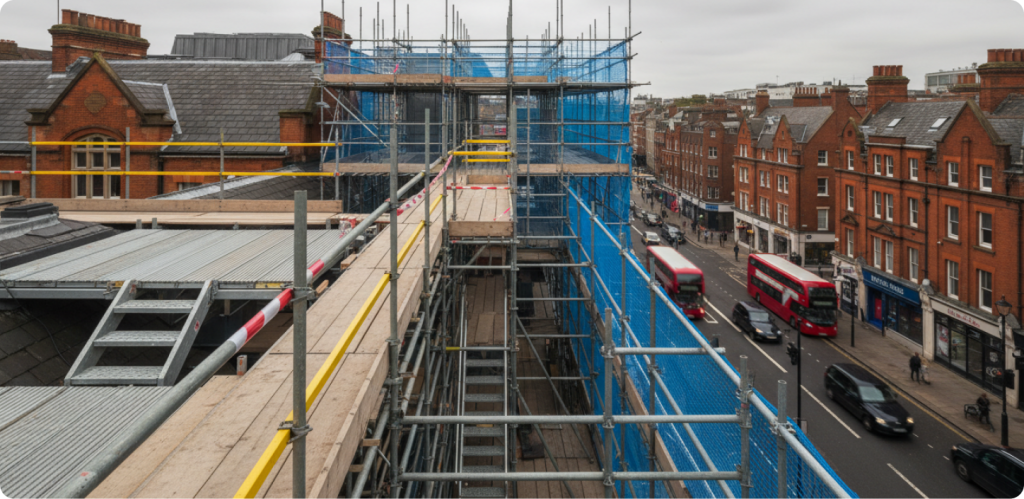
The main risks in airspace development are concentrated and predictable – the key is to de-risk them with early evidence and experienced delivery teams.
Common risks include:
- Legal and stakeholder risk – unclear rights or consent issues can stall the project
- Structural risk – strengthening works and unknown building condition can increase cost
- Planning risk – prior approval refusal or full planning sensitivity can delay delivery
- Logistics and disruption risk – building above occupied space increases safety and access constraints
- Compliance risk – fire strategy and building safety issues can trigger redesign late in the programme
- Exit risk – unit mix and amenity must match local demand, especially where access is shared
Practical risk controls include early legal due diligence, structural feasibility studies, pre-application planning engagement, detailed logistics planning and integrating compliance and fire strategy from concept stage.
How should you plan your airspace development exit strategy?

A strong exit plan supports both funding and profitability, and it should shape decisions about unit mix, specification, amenity and programme.
Common exit routes include:
- Open market sale – often suitable for strong-demand locations and owner-occupier layouts
- Refinance and hold – appropriate where rental demand is strong and building operations are stable
- Sale to investors – attractive for multi-unit schemes with steady yield potential
When modelling your exit:
- Run sensitivity analysis against slower sales or weaker pricing
- Use comparable evidence early to support GDV assumptions
- Align exit timing with realistic construction and sign-off timelines
How can you finance an airspace development project?
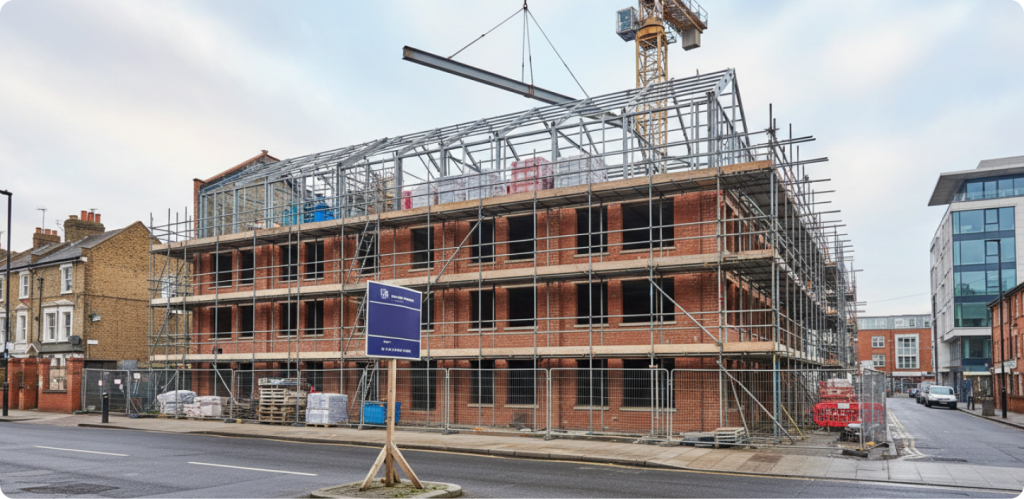
Funding airspace schemes typically requires a specialist lens because risk is concentrated in legal control, compliance and delivery logistics. Lenders want confidence that you’ve secured necessary rights, developed a compliant design, and planned construction around occupied-building constraints.
If you’re new to development finance or want to sense-check how lenders assess risk, it’s worth reading our guide on securing residential development finance.
If your scheme uses modern methods of construction (MMC), particularly where units are manufactured off-site and delivered for installation, you may need a forward funding approach to cover factory-stage costs. Not all lenders are set up for this, so you should confirm early whether your funder can support off-site manufacture as well as on-site delivery.
A strong funding proposal should demonstrate:
- Clear legal structure and evidence of rights and consents
- Structural feasibility and build methodology
- Fire strategy and building regulations approach
- A credible programme and logistics plan
- Exit evidence and realistic sales or refinance timelines
At CrowdProperty, we specialise in funding airspace development schemes, and we understand the unique challenges of building above existing occupied assets. Where schemes use MMC and off-site manufacture, we can support funding structures that include forward funding for factory-stage costs as well as on-site delivery.
What can you learn from successful airspace developments?
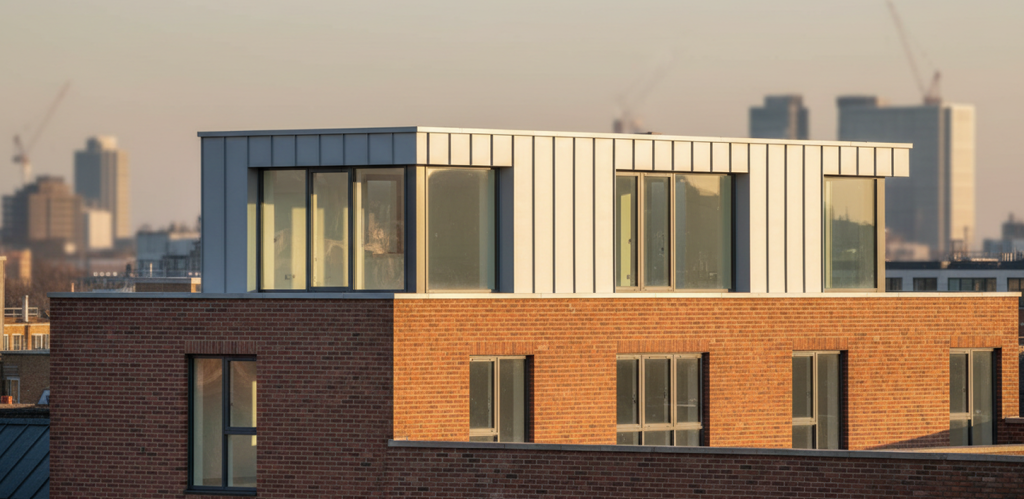
Successful airspace developers treat rooftop schemes as engineering and stakeholder projects, not just construction jobs. They prioritise legal control and feasibility early, build compliance into the design from day one, and manage disruption proactively.
They also recognise that airspace schemes are won or lost in the interfaces between new and existing structures and services. That means validating structural loading and build methodology early, locking down access and logistics, and ensuring the fire strategy works for both the new homes and the building below. Clear communication with residents, tenants and building managers is equally important, helping to maintain goodwill and reduce risk of delays.
With the right due diligence, design discipline and delivery team, airspace development can offer less competitive opportunities in strong locations and create value in ways traditional sites cannot.
Other articles you may find interesting
Modern methods of construction – a practical guide for SME developers
Property conversions – a guide to planning, risk and funding for SME developers
How SME property developers can secure residential development finance
Ready to discuss your next project?
At CrowdProperty, we support developers and brokers – offering deep market knowledge, responsive service, and tailored funding solutions.
Whether you’re working with a broker or approaching us directly, you’re guaranteed access to expert-led development finance that delivers on certainty, speed, and transparency.
If you’re a developer looking for funding, call 0203 012 0166 or email our Direct Team.
If you’re a broker looking to work with us, call 0204 525 2251 or email our Broker Team.
We’re property finance by property people. Together we build.