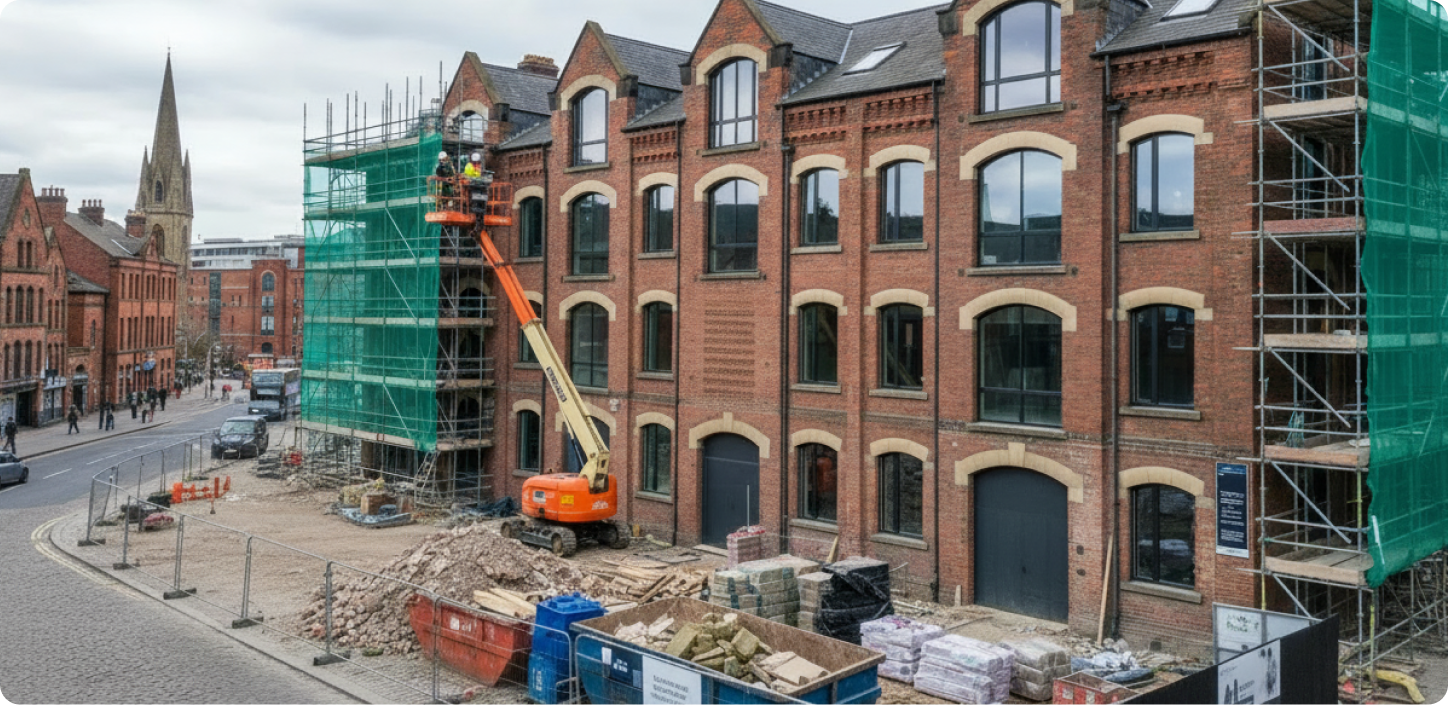
Property conversions can create standout homes and strong returns for developers – but planning constraints, hidden challenges, and exit strategy demand a unique approach. Our guide covers the key steps to success.
Few projects are as satisfying as breathing new life into existing buildings. Converting churches, mills, factories or redundant commercial space can create character-led schemes in supply-constrained locations. But success depends on the detail. In this guide we cover conversion opportunities, the planning and compliance checks to make early, how to manage common risks and contingencies, and how to align funding and exit strategy with a realistic programme.
Property conversion checklist
Before you commit, make sure you:
- Identify the planning route – check if full planning versus permitted development with prior approval and identify key constraints
- Commission the right surveys – make all relevant checks, allowing budget for further investigation where needed. Be prepared to walk away if this turns up issues that make the project non-viable, the vendor won’t renegotiate, or the risk is too big.
- Build a cost plan with contingency – ensure this is realistic, allowing a healthy buffer for heritage or complex fabric projects
- Choose an experienced team – ensure familiarity with complex renovation and refurbishment, compliance and live constraints (access, neighbours, listed status)
- Match design and spec – ensure your design matches a clear buyer, tenant or investor profile, backed with credible exit evidence
What types of property conversions offer opportunity?
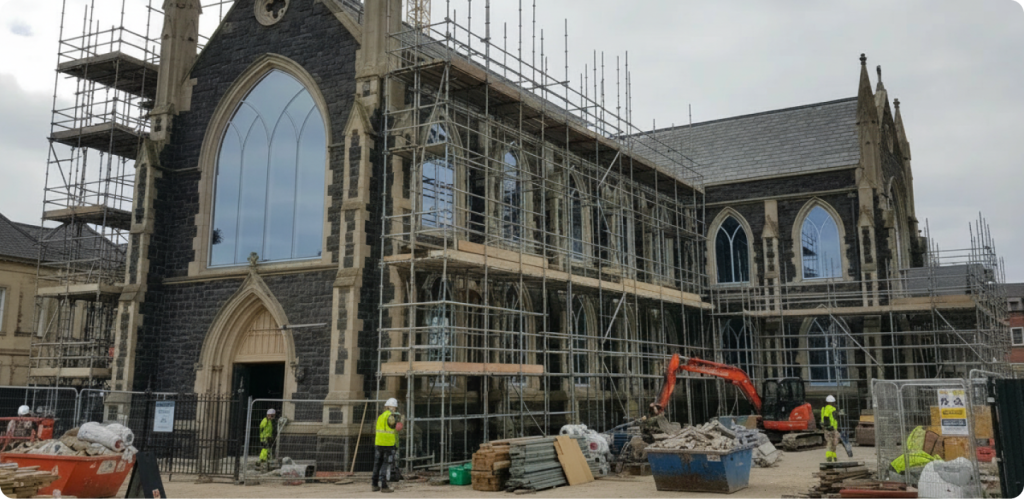
Conversions come in many forms, each with its own advantages and risks:
- Churches and chapels – full of architectural character, but often listed, with specific restrictions, and structurally complex, demanding care, skill, and attention to detail.
- Mills, warehouses and industrial buildings – large floorplans and industrial charm, ideal for loft-style living or mixed-use schemes, but services, acoustics and fire strategy can be demanding.
- Commercial-to-residential conversions – common for SME developers. Some schemes may work via permitted development (subject to prior approval), while others require full planning consent.
- Schools, hospitals and civic buildings – typically well-located and solidly built, but they often need creative layouts and careful compliance planning.
- Barns and agricultural structures – potentially viable under rural planning frameworks or permitted development routes, but access, drainage and utilities capacity can be deal-defining.
Unique conversions appeal to buyers and investors who want something different. Many are in desirable locations with limited supply, meaning well-executed schemes can outperform local comparables.
That said, each category has its own hurdles. Heritage constraints, access issues, building regulations and hidden structural challenges can quickly add cost and complexity. Commercial-to-residential projects, for instance, may require extensive reconfiguration of services, natural light provision and access to meet residential standards.
What planning and compliance factors do you need to consider?
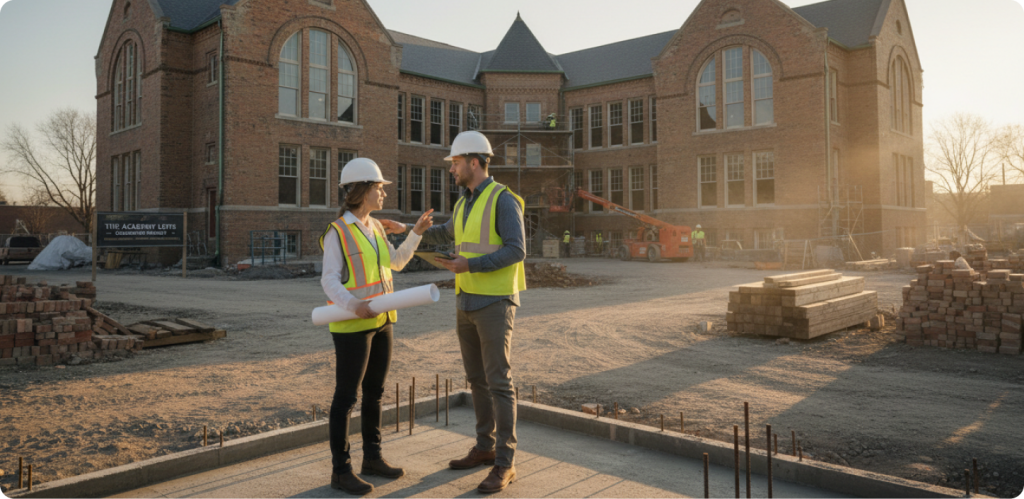
Planning permission and compliance are often the biggest determinants of success. Before you buy or commit to finance, check:
- Change of use and planning route – confirm the building’s existing use class and whether it can be changed to residential. Some conversions may qualify under permitted development rights such as Class MA (commercial to residential) or Class Q (agricultural to residential), but these are not automatic and typically require prior approval and specific criteria to be met. Other schemes will need full planning consent.
- Listed or heritage status – many older churches, mills and schools are listed or sit within conservation areas. You may need listed building consent for any work that alters historic fabric, supported by a heritage-led approach to design.
- Building regulations and fire strategy – conversions often trigger complex requirements around means of escape, compartmentation, acoustics, insulation and thermal upgrades. Engage the right professionals early to avoid redesign later in the programme.
- Structural integrity – commission an experienced structural engineer early. Older buildings may require steel frames, underpinning, roof reconstruction or remedial works once the true condition is understood.
- Access, utilities and services – check that utilities can be upgraded and validate access, parking and local highway requirements. Capacity constraints can meaningfully affect both cost and programme.
- Design and layout – conversion plans often need creative solutions for natural light, ceiling height, insulation and storage. The more complex the layout, the more important early buyer or tenant profiling becomes.
It’s often worth consulting your local planning authority early in the process, or arranging a pre-application meeting to test proposals and surface constraints.
What are risks with conversions and how can you manage them?
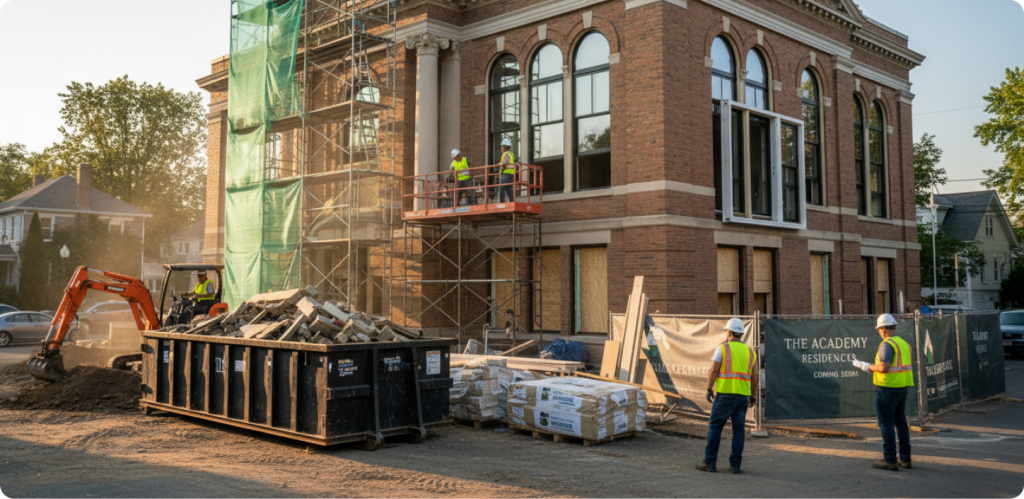
Conversions are rarely straightforward. The most common risks SME developers face include:
- Hidden defects – rot, damp, unstable foundations, roof failure, contaminated materials and undocumented alterations often emerge once work starts. Carry out detailed surveys and consider intrusive investigations where appropriate. Keep a contingency that matches complexity – 10–15% can be a minimum, with higher allowances for listed or structurally uncertain assets.
- Budget creep – bespoke restoration, custom glazing and specialist materials can escalate costs. Use fixed-price elements where possible, control changes tightly and align specification to your exit market.
- Delays – unexpected findings such as bats, asbestos or archaeology can halt work. Build flexibility into timelines, plan for lead times on specialist items and sequence works carefully.
- Finance fit – some lenders view conversions as higher risk, particularly where there is major structural change, heritage complexity or uncertain planning position. A strong proposal helps – surveys, programme, procurement plan, professional team and robust cost controls.
- Exit uncertainty – conversions can attract a price premium, but they can also appeal to a narrower audience. Model multiple exit routes, including resale and refinance, and back assumptions with evidence.
Well-prepared developers reduce risk through thorough due diligence, an experienced team and contractors with a track record in heritage or complex refurbishments.
How should you plan your conversion exit strategy?
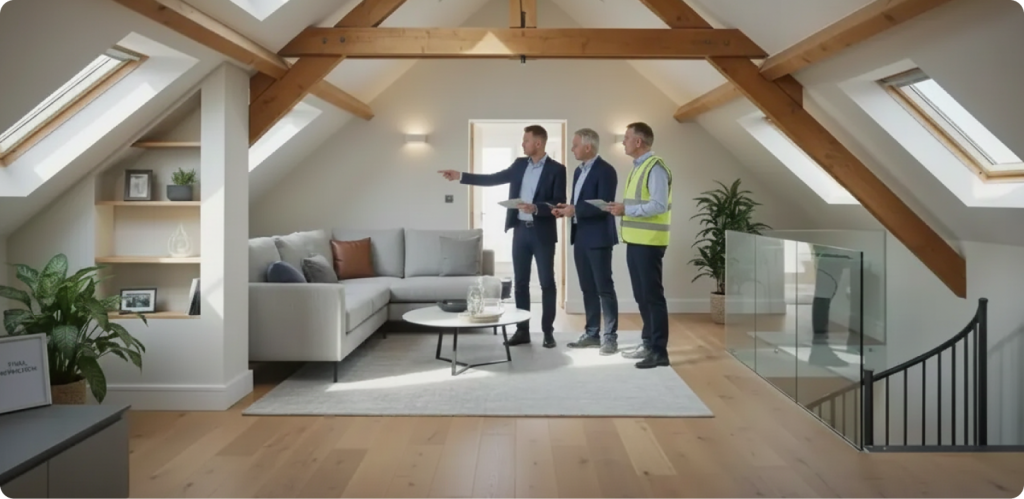
A strong exit plan is critical to securing both funding and profit. Your lender will expect to see clear options that match your scheme type, location and demand profile.
Common exit routes include:
- Sale to owner-occupiers – often suits unique, character-driven homes in strong residential markets
- Refinance and hold – suitable where rental demand and asset performance support longer-term retention
- Sale to investors – attractive for converted blocks or multi-unit schemes with steady yield potential
When modelling your exit:
- Use sensitivity analysis to test your numbers against lower sale prices or extended marketing periods
- Gather comparable sales and letting evidence early, especially for niche products like chapel apartments or mill lofts
- Include timing and redemption strategy so your finance aligns with realistic disposal or refinance timelines
How can you finance a property conversion project?
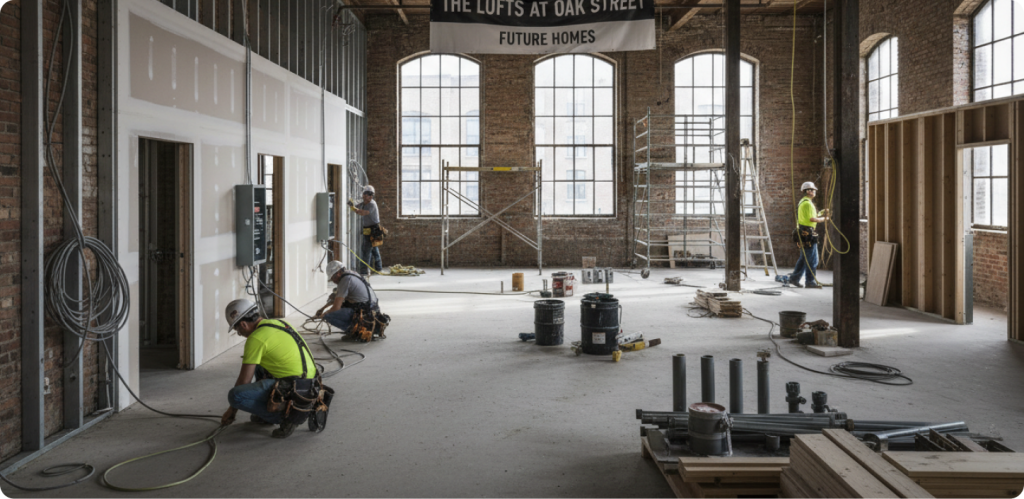
Funding conversions often requires a more tailored approach than standard development loans. Here’s what to keep in mind:
- Leverage and structure – development finance is often structured around measures such as LTGDV and LTC, with terms varying by asset type, planning status, programme risk and borrower experience.
- Interest structure – rolled-up interest is common for conversion schemes to support cash flow during the build.
- Staged drawdowns – funds are usually released in tranches following independent inspections and progress monitoring.
- Team and experience – lenders typically favour borrowers with proven track records or professional teams who have handled similar projects.
- Appraisal detail – a strong proposal includes a credible programme, procurement strategy, risk assessment and contingency allowances, supported by evidence for GDV and exit route.
At CrowdProperty, we specialise in funding conversions, including churches, mills and commercial-to-residential – offering flexible development finance designed to fit complex programmes.
What can you learn from successful property conversions?
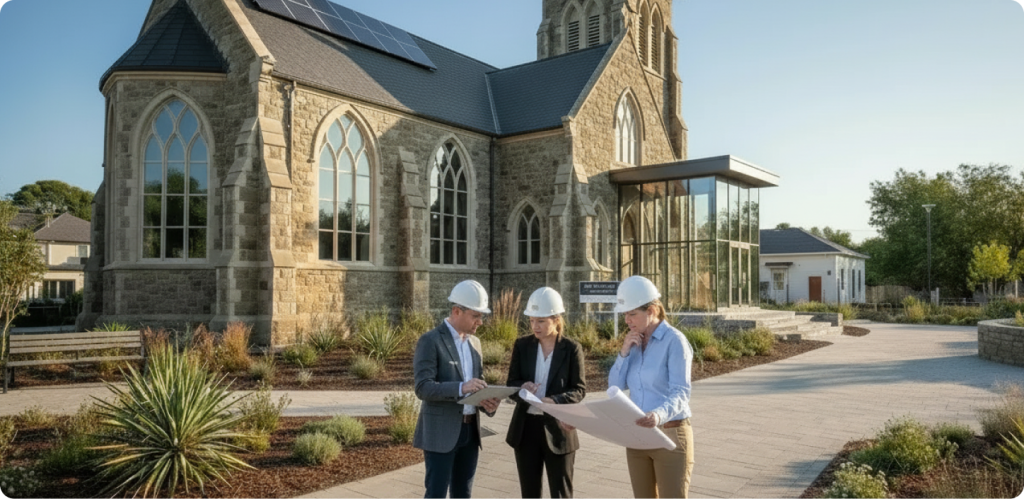
The most successful SME developers tackle conversions as both a design and business challenge, typically following this approach:
- Engage with planning early – fully explore constraints and secure the right planning before you over commit
- Choose experienced professionals – those familiar with historic structures and refurbishment sequencing
- Understand the market – who’s buying, renting or investing in the finished product
- Control costs – maintain tight budget control with contingency for unknowns
- Plan your exit strategy early – this helps frame the design, to ensure fit with local demand
Conversions can deliver excellent margins and long-term value when executed with precision, patience and a realistic approach to risk.
Other articles you may find interesting
Modern methods of construction – a practical guide for SME developers
How SME property developers can secure residential development finance
Developer Survey 2025 – how does the future look for property development?
Ready to discuss your next project?
At CrowdProperty, we support developers and brokers – offering deep market knowledge, responsive service, and tailored funding solutions.
Whether you’re working with a broker or reaching out to us directly, you’re guaranteed access to expert-led development finance that delivers on certainty, speed, and transparency.
If you’re a developer looking for funding, call 0203 012 0166 or email our Direct Team.
If you’re a broker who wants to work with us, call 0204 525 2251 or email our Broker Team.
We’re property finance by property people. Together we build.