
Welcome to State of the Market, our monthly roundup of key property market updates, with actionable insights for small and medium-sized property developers.
Key takeaways:
- House prices remain stable – but geopolitical risk clouds outlook
- Mortgage pricing volatility returns – lenders repricing loans
- Build cost inflation eases – but margins remain tight
- Planning delays persist – programme risk remains elevated
- Housing supply pipeline constrained – developers remain cautious
1. House prices remain stable – but geopolitical risk clouds outlook
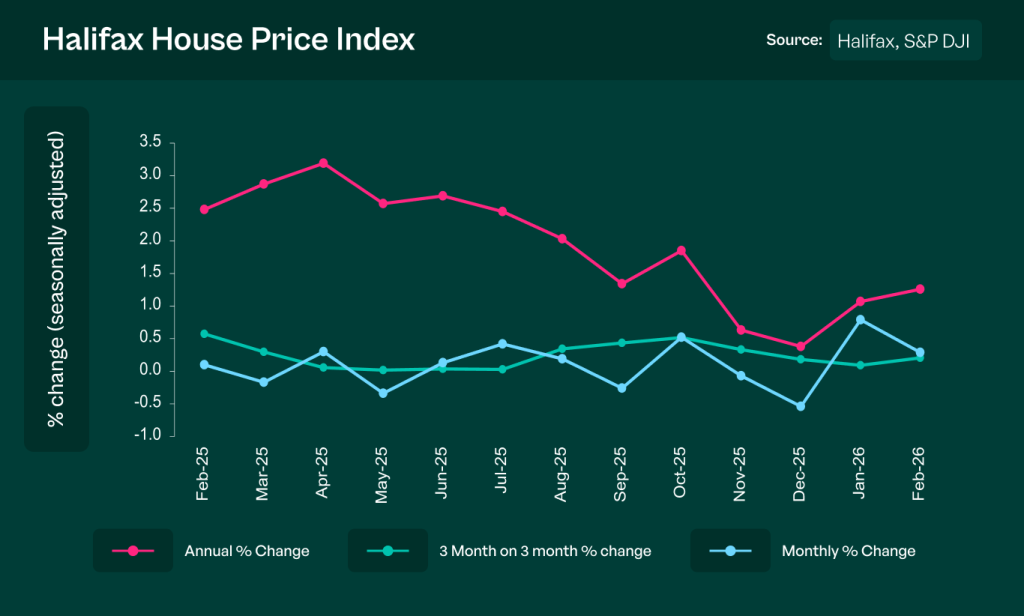
The UK housing market continued its steady start to 2026 through February. The latest Halifax House Price Index shows prices remained broadly stable, with modest annual growth and continued evidence of selective but resilient buyer demand. Well-priced homes in strong employment areas continue to transact, although affordability constraints still influence purchasing decisions.
However, market sentiment became more uncertain following the escalation of conflict involving Iran on 28 February. Rising oil prices and financial market volatility have already begun influencing inflation expectations and mortgage pricing, introducing a new macro risk for the housing market.
Source: Halifax House Price Index – February 2026
What this means for SME developers:
Buyer demand remains present for competitively priced homes, but macro volatility could slow improvements in affordability. Conservative GDV assumptions and flexible exit strategies remain prudent as markets adjust.
2. Mortgage pricing volatility returns – lenders repricing loans

Mortgage markets reacted quickly to the escalation in Middle East tensions, with rising oil prices pushing up inflation expectations and swap rates. Several lenders began repricing mortgage products in early March as markets adjusted to the potential for interest rates to remain higher for longer.
Mortgage pricing remains the single most important driver of housing market liquidity. Even small movements in mortgage rates can significantly affect buyer affordability and transaction volumes.
Source: Mortgage rate outlook and market repricing commentary – Reuters
What this means for SME developers:
Mortgage pricing directly influencing exit liquidity. Developers should stress-test sales values and programme timelines against scenarios where mortgage affordability tightens again.
3. Build cost inflation eases – but margins remain tight
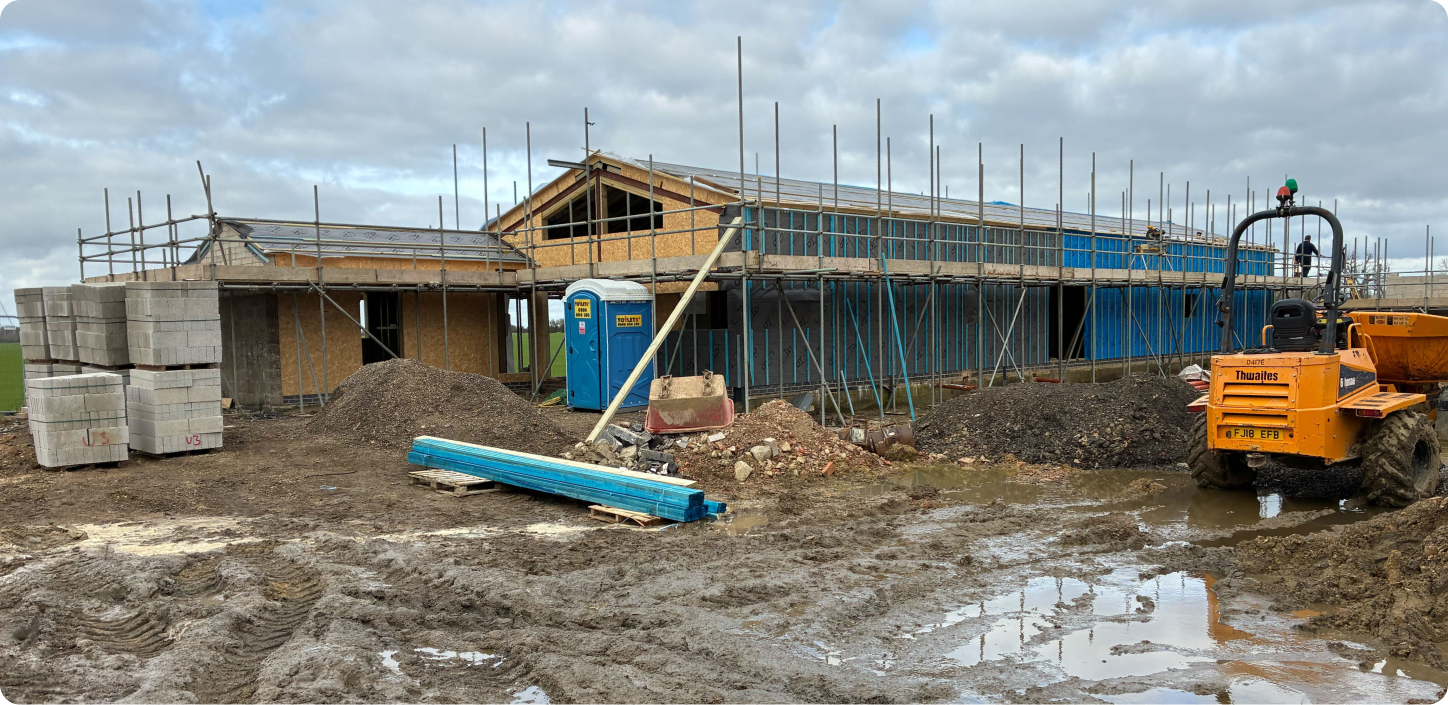
Construction cost inflation has slowed significantly compared with the spikes seen during 2022 and 2023. Materials availability has improved and price increases across several key categories have moderated, providing greater clarity for development appraisals.
Despite this improvement, build costs remain elevated relative to historic norms. Labour shortages and energy costs continue to influence contractor pricing and project viability.
Source: Building Materials and Components Statistics – GOV.UK
What this means for SME developers:
Improved cost visibility supports better feasibility planning, but disciplined procurement and contingency allowances remain essential to protect margins.
4. Planning delays persist – programme risk remains elevated
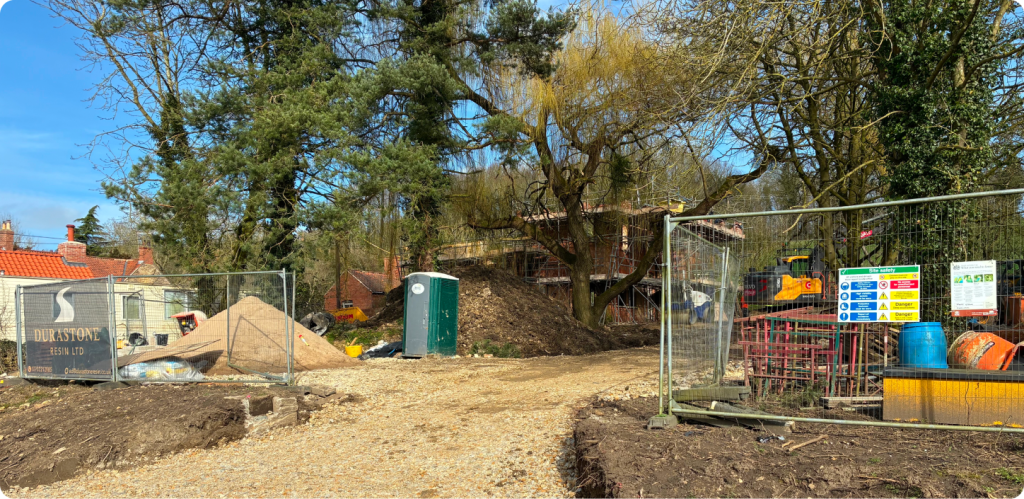
Planning delays continue to affect development programmes across the UK. Many local authorities remain stretched in terms of planning resources, resulting in longer determination periods and slower discharge of planning conditions.
While planning reform remains a policy priority, developers continue to experience programme uncertainty and extended approval timelines across many parts of the country.
Source: Planning performance statistics – GOV.UK
What this means for SME developers:
Programme risk remains a key consideration. Developers should allow for longer planning timelines within feasibility models and funding structures.
5. Housing supply pipeline constrained – developers remain cautious
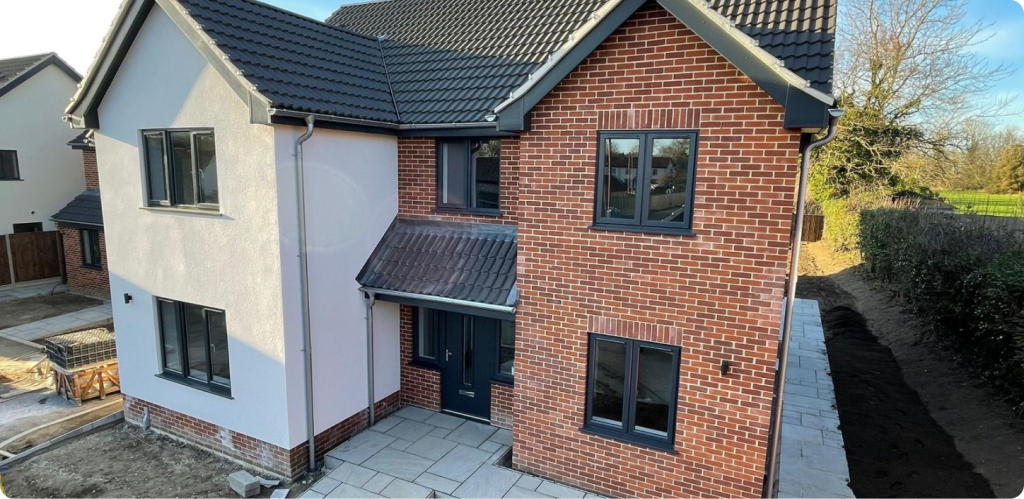
Despite stabilising house prices, many developers remain cautious about launching new schemes. Higher borrowing costs over the past two years and continued uncertainty around demand have encouraged developers to prioritise completing existing projects rather than expanding pipelines aggressively.
As a result, the pipeline of new housing supply remains constrained, which may help support pricing stability as the market gradually recovers.
Source: Construction activity decline continues – Builders Merchants News
What this means for SME developers:
Lower development activity across the market may reduce competition for viable opportunities. Developers able to move forward with well-structured schemes could benefit from constrained future supply.
Steve Deutsch, CrowdProperty CEO, comments:
February reinforces a market defined by discipline rather than exuberance. House prices remain broadly stable and build costs are becoming more predictable, but developers are understandably cautious about expanding pipelines. The escalation of geopolitical tensions is a reminder that external shocks can quickly influence borrowing costs and buyer sentiment. Developers who combine realistic pricing, strong equity and disciplined structuring remain best placed to navigate the market through 2026.
And finally…
Here are five timely reads to keep you informed this month:
- New public register to create ‘extra red tape’ – Property Industry Eye
- SME developers must be central to delivering regeneration – Housing Digital
- New Future Homes Standard campaign to help deliver low energy homes – PBC Today
- Sector reacts to draft revision to National Planning Policy Framework – New Civil Engineer
- Residential planning applications on the rise – The Construction Index
Together we build

At CrowdProperty, we work in close partnership with the developers we back – solving site, funding and delivery challenges together. Our team of property experts visits sites, shares insights, and helps developers stay ahead of the market.
We’ve funded over £900million in property projects, backed by 300+ years of combined property expertise. Our distinct ‘property finance by property people’ approach means we truly understand what developers need – and how to help them grow.
Learn more about our story and our team
Apply in just five minutes and get an instant Decision in Principle. Our property experts will then share their insights and initial funding terms, and work with you to find the right solutions to support the success of your project.
Explore projects we’ve already funded