
Welcome to State of the Market, our monthly roundup of key property market updates, with actionable insights for small and medium-sized property developers.
Key takeaways:
- House prices fall – first annual decline since 2023
- Base Rate stays at 3.75% – inflation clouds the outlook for cuts
- Build costs remain elevated – housing construction loses momentum
- Planning rules ease for medium sites – SMEs gain a more proportionate route
- Nature Restoration Fund moves into delivery – new route could unblock stalled sites
1. House prices fall – first annual decline since 2023
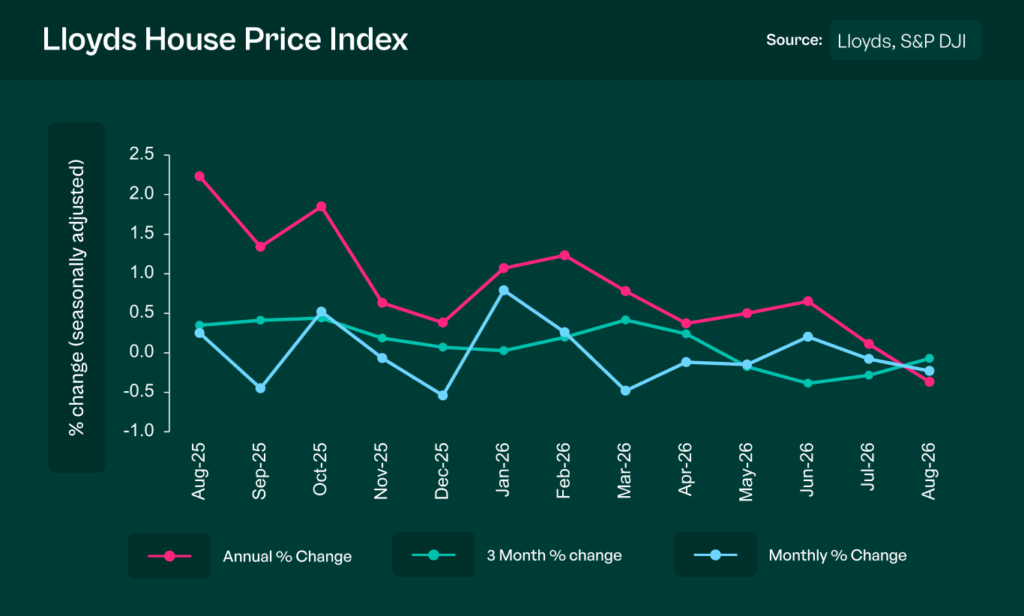
The latest Lloyds House Price Index shows UK house prices fell by 0.2% in August, taking the average property value to £298,468. Annual growth also moved into negative territory at -0.4%, marking the first year-on-year fall in house prices since November 2023.
The latest figures extend the subdued trend seen over recent months, with prices having also fallen slightly in July. Affordability remains a significant constraint on demand, as higher mortgage costs continue to limit purchasing power and buyers remain selective.
However, the relatively modest scale of the decline points to a market adjusting rather than experiencing a significant correction. Conditions also continue to vary considerably between regions and local markets, reinforcing the importance of looking beyond national headline figures when assessing individual schemes.
Andrew Asaam , Mortgages Director, comments:
The housing market has faced a more difficult backdrop in recent months, with the impact of global events on inflation and borrowing costs creating greater economic uncertainty. What we’re not seeing is a rush of homeowners cutting prices. But more are choosing to sit tight, with sellers reluctant to accept offers they feel are too low, while some buyers are waiting to see how conditions develop.
Source: Lloyds House Price Index
What this means for SME developers:
Softer pricing reinforces the need for realistic GDV assumptions based on current local evidence. Developers should continue to monitor achieved prices, competing stock and local buyer affordability, while ensuring schemes have sufficient headroom if values remain flat or soften further.
2. Base Rate stays at 3.75% – inflation clouds the outlook for cuts

The Bank of England has held Base Rate at 3.75% for a sixth consecutive meeting, providing continued stability for borrowers and developers. The Monetary Policy Committee voted 6–3 to maintain the rate, with three members preferring an immediate increase to 4.0%.
The decision comes as inflationary pressures have increased. UK CPI inflation rose to 3.1% in August, up from 2.9% in July, with higher energy prices accounting for much of the overshoot above the Bank’s 2% target. The Bank expects inflation to rise further over the coming quarters and now considers the risks to the inflation outlook to be more weighted to the upside than at its July assessment.
While there has been limited evidence so far of higher energy costs feeding more broadly into wages and prices, continued volatility means the path towards lower borrowing costs remains uncertain. For developers, the current environment offers greater stability than a period of rapidly changing rates, but little justification for assuming significant reductions in finance costs in the near term.
Andrew Bailey, Monetary Policy Chair, comments:
Financial conditions will continue to work to push down on inflation, and holding Bank Rate is appropriate at this meeting. But if the conflict in the Middle East persists for an extended period, as appears to be the case, and the risk of second-round effects emerging increases, it is likely that policy may have to tighten.
Source: Monetary policy and summary September 2026
What this means for SME developers:
Rate stability provides a more predictable backdrop for appraisals and funding decisions, but developers should remain conservative when forecasting future borrowing costs. Sensitivity testing projects against different interest-rate and exit scenarios remains important while inflation risks persist.
3. Build costs remain elevated – housing construction loses momentum
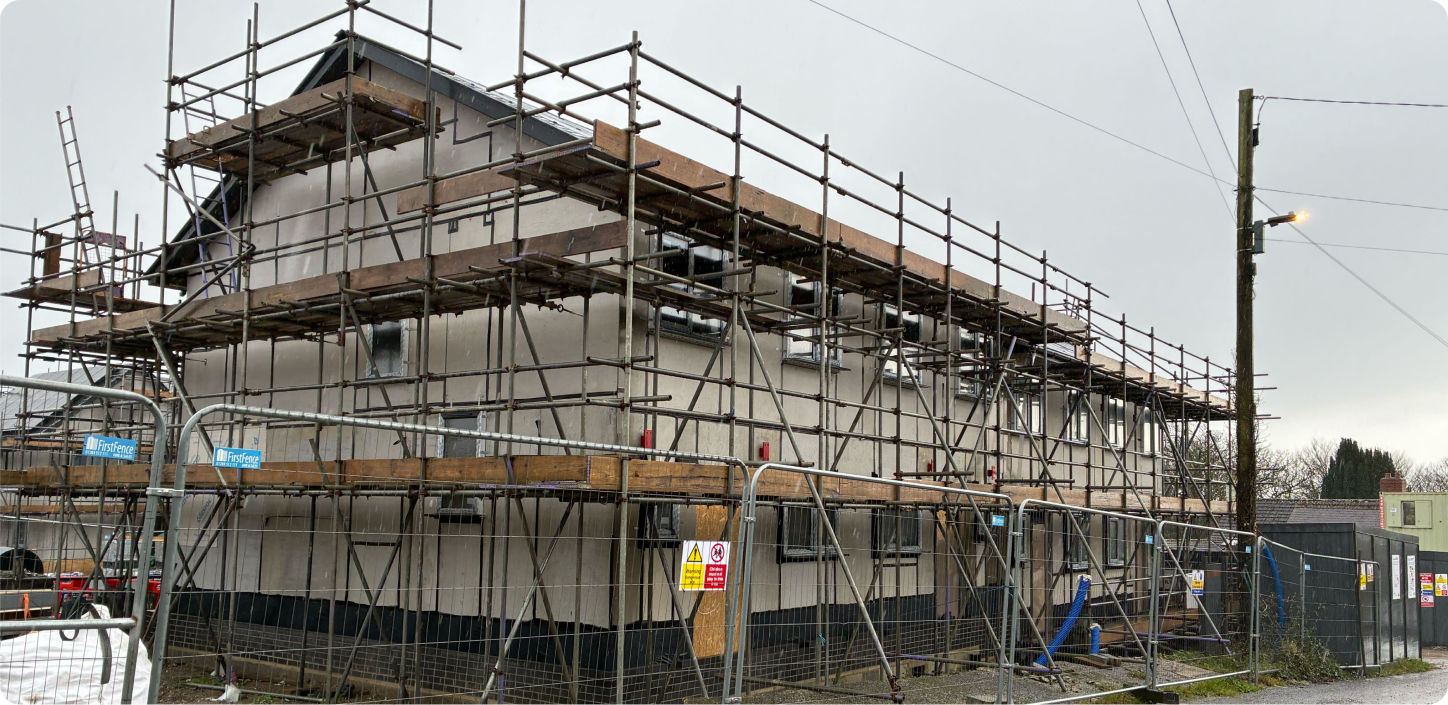
Build costs remain a significant challenge for developers. The latest government construction materials data shows prices for materials used in new housing were 4.9% higher in July than a year earlier, while the broader all-work materials index increased by 5.9%.
This reflects the concerns being reported across the development industry. A recent Intermediary poll found that 38% of respondents identified build costs as the biggest barrier to delivering new homes, ahead of planning rules at 35% and housing growth failing to keep pace with demand at 25%.
Meanwhile, the latest S&P Global UK Construction PMI suggests residential activity has weakened again. The headline construction index slipped from 44.7 in July to 44.3 in August, remaining below the 50 mark that separates growth from contraction. Residential construction recorded a sharper decline, falling to 37.6 and becoming the only major construction category where the pace of contraction accelerated during the month.
There were some more encouraging signals beneath the headline figures. New orders declined at their slowest rate since September 2025, employment reductions eased and input price inflation reached a six-month low. This suggests some cost pressures may be moderating even as overall housebuilding activity remains weak.
Sources: S&P Global UK Construction PMI – August 2026, Building costs poll – The Intermediary
What this means for SME developers:
Elevated material costs and weaker construction activity reinforce the importance of disciplined cost management. Developers should continue to validate build budgets against current pricing, maintain appropriate contingencies and actively manage procurement. Softer industry activity may create opportunities to secure contractor capacity, but this should not be relied upon to offset continuing cost pressure.
4. Planning rules ease for medium sites – SMEs gain a more proportionate route

Recent planning changes could provide a more proportionate route through the system for SME developers. The revised National Planning Policy Framework formally introduces a new category of ‘medium’ development, covering schemes of 10–49 homes on sites of up to 2.5 hectares.
The Government has subsequently launched a consultation on standardising Section 106 agreements for these sites. Four proposed templates cover bilateral agreements, unilateral undertakings and affordable housing schedules, with the intention of reducing negotiation, improving consistency and providing greater certainty around planning obligations.
The changes are specifically intended to address challenges faced by smaller developers. Government guidance notes that schemes of this scale are predominantly delivered by SMEs and that streamlining planning obligations should support a more proportionate system and accelerate delivery.
The proposals remain subject to consultation, so their practical impact will depend on the final arrangements and how consistently they are adopted. Nevertheless, a more standardised approach could reduce some of the cost, time and uncertainty associated with bringing smaller and medium-sized sites forward.
Source: Standard planning agreements for medium-sized sites – Gov.uk
What this means for SME developers:
A more proportionate approach to medium-sized sites could make schemes of 10–49 homes easier to progress, particularly where lengthy Section 106 negotiations have previously added cost and uncertainty. Developers considering sites of this scale should follow the consultation closely and factor the emerging framework into future planning strategies.
5. Nature Restoration Fund moves into delivery – new route could unblock stalled sites
The Government’s new Nature Restoration Fund is moving into practical delivery, with the first proposed Environmental Delivery Plan published in Norfolk. The scheme aims to enable development of up to 15,780 homes currently affected by nutrient pollution constraints while funding wider improvements to rivers, wetlands and protected habitats.
Under the new system, eligible developers will be able to pay a Nature Restoration Levy where their development and its environmental impact are covered by an approved Environmental Delivery Plan. Rather than arranging certain project-specific assessments and mitigation measures themselves, developers can use the levy to discharge the environmental obligation covered by the plan. Contributions are then pooled to fund strategic conservation measures.
For developers, the potential benefit is greater certainty over process and mitigation requirements. Once an Environmental Delivery Plan is in force, developers will be able to establish whether their scheme is eligible and obtain a levy quote based on factors including location, number of homes and the relevant charging schedule. Other environmental and planning requirements not covered by the plan will continue to apply.
The Norfolk plan is currently under consultation and therefore provides the first significant test of how the new system will work in practice. Natural England has also confirmed that it is developing Environmental Delivery Plans for other areas affected by nutrient pollution.
Source: Government unveils plans to unlock over 15,000 new homes – GOV.UK
What this means for SME developers:
For schemes affected by environmental constraints, the Nature Restoration Fund could provide a clearer and more predictable route through part of the planning process. Developers should check whether future Environmental Delivery Plans cover their area and understand the associated levy costs when assessing site viability. The Norfolk rollout will be an important early indication of whether the new approach can reduce delays in practice.
Steve Deutsch, CrowdProperty CEO, comments:
The market remains challenging, but there are positive developments for SME developers. Rate stability provides greater certainty, while changes to planning and environmental mitigation could help make more sites viable and easier to progress. With build costs and affordability still putting pressure on margins, disciplined appraisals, realistic assumptions and careful site selection remain essential.
What this means for property investors
This month’s data highlights the mixed conditions facing the UK property development market. House prices and residential construction remain subdued, while stable interest rates provide greater certainty and recent planning changes could help support the future development pipeline.
For investors, these trends provide useful context when considering the wider environment in which property projects are being delivered. Build costs, planning requirements, local housing demand and the availability of development finance can all influence project delivery and remain important factors to understand when assessing the property development market.
And finally…
Here are five timely reads to keep you informed this month:
- Construction starts plunge 49% but contract awards soar – Construction News
- The shift reshaping UK buy-to-let – The Intermediary
- The evolving role of cost management in the age of AI – Building
- Landlords must sign up to PRS database, MHCLG confirms – Property Week
- Conveyancer shortage adds pressure as time to exchange hits 123 days – Development Finance Today
Together we build

At CrowdProperty, we work in close partnership with the developers we back – solving site, funding and delivery challenges together. Our team of property experts visits sites, shares insights, and helps developers stay ahead of the market.
We’ve funded over £900 million in property projects, backed by 300+ years of combined property expertise. Our distinct ‘property finance by property people’ approach means we truly understand what developers need – and how to help them grow.
Learn more about our story and our team
Apply in just five minutes and get a Decision in Principle. Our property experts will then share their insights and initial funding terms, and work with you to find the right solutions to support the success of your project.
Explore projects we’ve already funded